

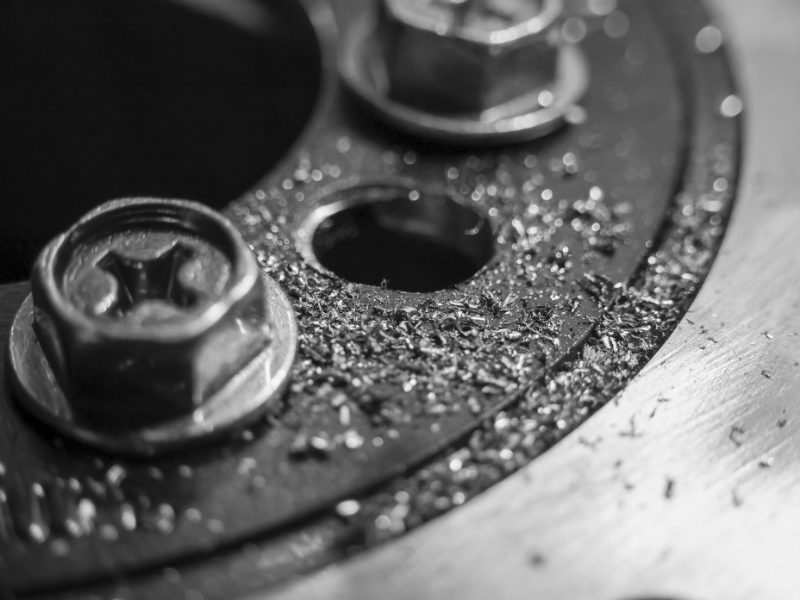
Learn how SANEZOO Inspection can be used to detect structural defects on machined and manufactured surfaces.
Small Surface Flaws, Serious Production Risks
Machined parts often look stable and clean at first sight. Their shape is defined, the surface is processed, and the component may appear ready for the next production step. But even small structural defects can become a serious issue. A fine crack, a broken edge, a local deformation, or an irregular material pattern may affect how the part fits, behaves under load, or performs in the final product.

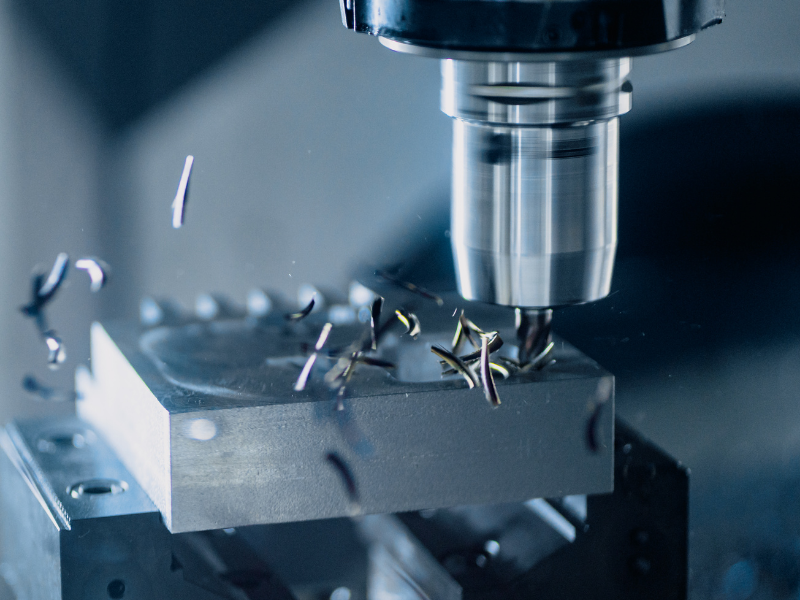

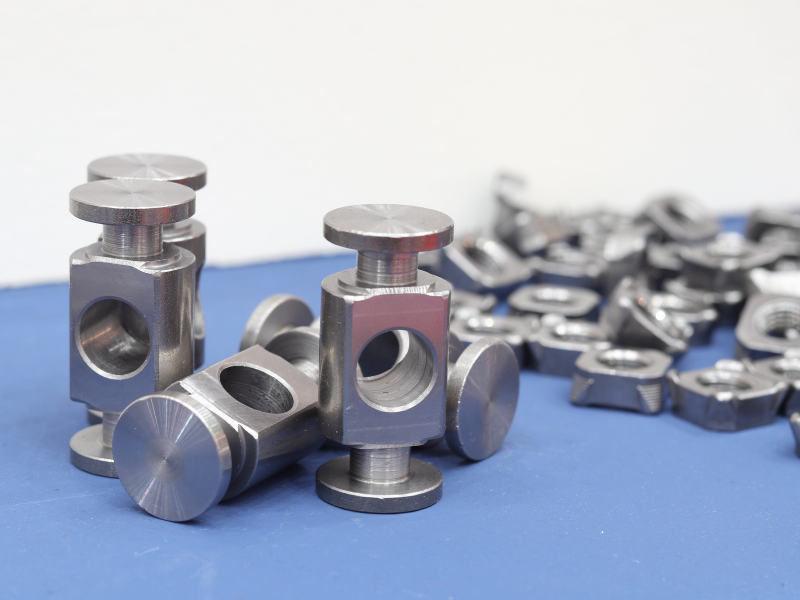
This is especially important in industries where part reliability is directly connected to safety, hygiene, or process stability — for example in automotive, aerospace, healthcare, food and beverage, chemical production, laboratories, and other demanding environments.
Inspection Task
The task was to inspect machined surfaces and identify defects that could compromise the integrity of the part.
Unlike purely cosmetic surface marks, structural defects are not only a question of appearance. They can indicate damage to the material, loss of geometry, or a weak point in the component. If such defects are missed, the part may continue into assembly, sealing, testing, or final use, where the cost of failure is much higher.

For this application, SANEZOO Inspection focused mainly on visible cracks, broken edges, local deformations, and abnormal surface patterns. The goal was to detect these defects automatically and flag suspicious parts in real time before they moved further in the production process.
AI-Based Surface Evaluation
SANEZOO Inspection uses AI-powered image analysis to evaluate the surface of the inspected part. Instead of relying only on fixed geometric rules, the neural network learns to identify visual patterns that indicate a structural defect.
This is useful because structural defects are often irregular. A crack does not always have the same length, width, contrast, or direction. An edge break may look different depending on the shape of the component and the angle of the missing material. Material inconsistencies may appear as local disruptions in texture or surface structure.
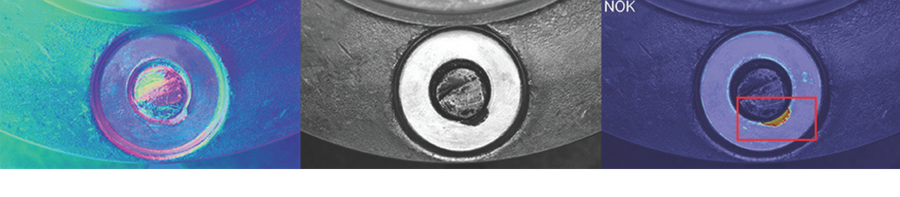
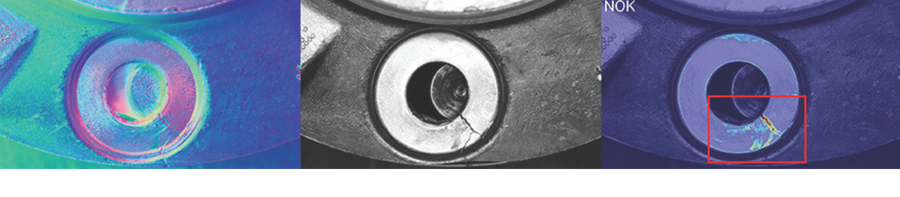
The AI model is trained to recognize these abnormal patterns and distinguish them from the expected appearance of the machined surface.
Analysis of Defined Surface Zones
In many industrial applications, not every area of the part has the same importance. Some surfaces are critical for sealing, positioning, mechanical contact, or assembly. Other areas may be less sensitive.
For this reason, the inspection can be configured to analyze defined surface zones. Multiple zones can be evaluated within one image, allowing the system to focus on the areas where structural defects matter most.
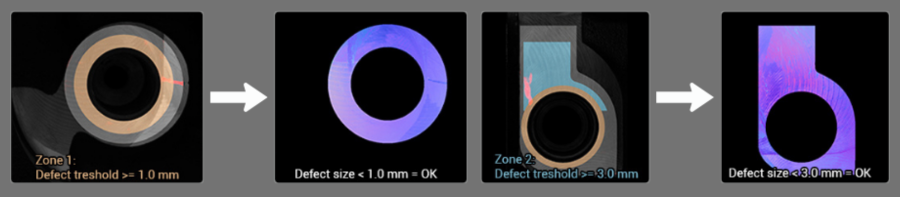
This makes the inspection more precise and more relevant to the actual production process.
Why Structural Defect Detection Matters
Structural defects are often small, but their impact can be significant.
Automated inspection helps detect these problems earlier and more consistently. It also provides a more objective way to evaluate parts that would otherwise depend on human attention, experience, and fatigue.
From Visual Defect to Process Insight
SANEZOO Inspection does not only help decide whether a part is OK or NOK; by identifying where defects appear and how often they occur, the system can also support better understanding of the manufacturing process.
While this use case focuses on machined surfaces, the same inspection principle can be applied to many manufactured parts where structural integrity is critical. SANEZOO Inspection is designed for applications where even small defects can affect safety, functionality, or long-term reliability.